















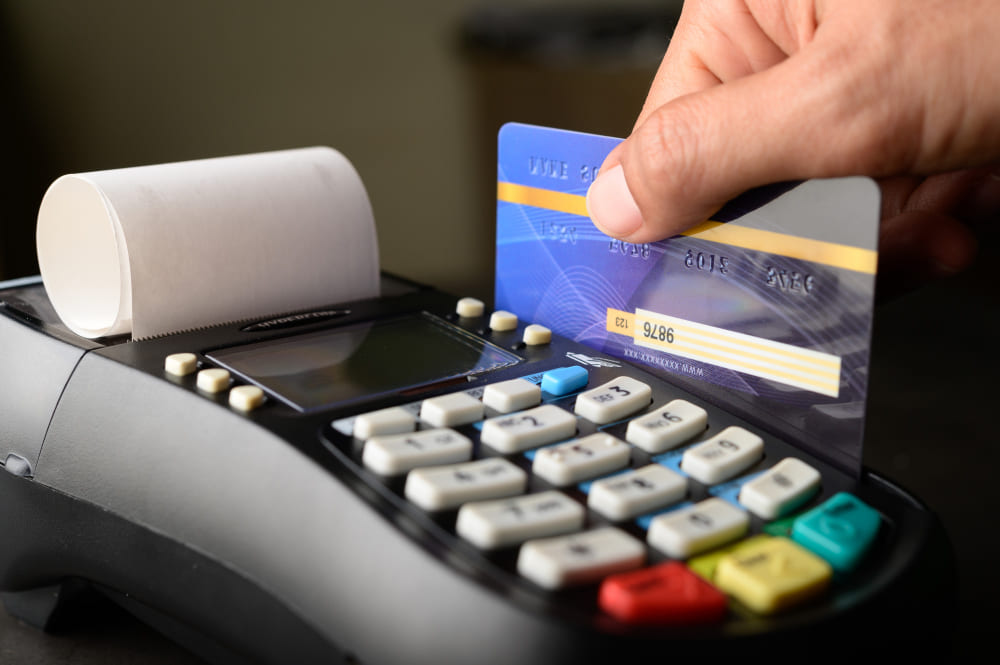
If you are taking card payments from customers, either in person or online, you will need a merchant account to be able to process these transactions.
The type of business you are running and the industry it is associated with are two factors that are highly influential in helping card payment providers to decide if you are perceived to be a higher risk than normal.
Typical examples of where you would need the services of a high risk credit card processor would be for a business that is operating within the gambling, pharmaceuticals, or adult entertainment industries. These are prime examples of industries that are labeled as high risk because of certain characteristics associated with them. This is because there will be a higher percentage of chargebacks, refunds, and instances of fraud.
These are just a few examples of how your business could be classed as a high risk when applying for merchant account services.
Let’s take a look at the sort of scenarios and conditions where it is likely that you will need to go with a high risk credit card processor to be able to handle all the transactions you want to put through on a card.
What are the key characteristics of a high risk business?
As already outlined, if you are operating in an industry that has a heightened reputation for risk, this will be a red flag to some merchant services providers, and they may well decline your application purely on the basis of the sector you operate within.
Certain industries have a natural propensity for a larger percentage of disputed transactions and chargebacks than normal. This is a situation that is seen as a liability to some merchant service providers.
If you are processing a large amount of international payment transactions, this is also viewed as a potential risk. This is viewed with even greater caution if you are doing business in countries that are renowned for high fraud rates.
The value of each transaction can also be a factor. If you are consistently processing payments in excess of $100, this increases the risk of fraud and costlier chargebacks, all of which are a potential liability to merchant services providers.
Your own credit profile can also prove to be a determining factor. If you have a bad credit history that is flagged up on your application, this can result in your business being classified as high risk, even if the nature of your business is not.
Also, if you operate within a highly regulated industry such as selling tobacco products, this can result in a high-risk classification because of legal and regulatory complexities.
Last but not least, if your business is new and does not have an established track record, you may well be viewed as a higher risk until you get some solid data behind you.
What are the pros and cons of having a high risk merchant account?
Ultimately, you want to be able to take payments for your business and make the process as easy as possible for you and your customers. With that in mind, the default option would be to have a high risk merchant account if you are running a business within a sector that is automatically deemed to represent a greater risk to merchant services providers.
With this in mind, there are some clear advantages attached to having a high risk merchant account.
The most obvious plus point is that you will be able to accept the majority of credit and debit card payments when you have a high risk account. This gives you greater flexibility and allows you to expand your business without too many restrictions.
Another advantage to your business is having the ability to accept payment in a multitude of different currencies. This alongside enhanced security measures that are designed to mitigate the risk to your business of fraud are likely to prove a big help as you try to grow your venture.
When you have a high risk merchant account you are also likely to benefit from greater leniency when it comes to potential sales volume restrictions. Providers who are geared up to deliver high risk merchant services are often far more accommodating with regard to fluctuating or high transaction volumes. This flexibility combined with a greater resilience to chargebacks gives you a solid platform to grow, especially when you know that the high risk merchant services provider has most of the bases covered.
As you might expect, there are some potential disadvantages that you have to be aware of when you go down the high risk merchant services provider route.
The most obvious downside is that these accounts tend to attract slightly higher costs. You can typically expect to pay higher monthly fees and transaction charges, but these are reflective of the risk that is involved in processing these payments.
You may also find that your high risk account requires a rolling reserve. This means that a percentage of your transactions will be held back in order to cover for potential chargebacks and disputes.
There is also the prospect of a longer settlement period to factor into your cash flow projections. It may take a few days longer to access funds when you have a high risk merchant account.
These are all things that you can make contingency plans for and build into your trading model.
All things considered, if you want to run a business that is considered to be in a high risk sector, or your circumstances make you a higher risk, such as having a poor personal credit profile, having this type of merchant account is a great solution.
You should expect to be subjected to a more rigorous application process, but that’s to be expected. As long as you prepare all the documentation such as licenses and financial history data, there should be no reason why you can’t get your account up and running as quickly as possible.
Look for a high risk merchant account provider that meets all of your fundamental needs and try to choose one that has specific experience and knowledge within your industry sector.